
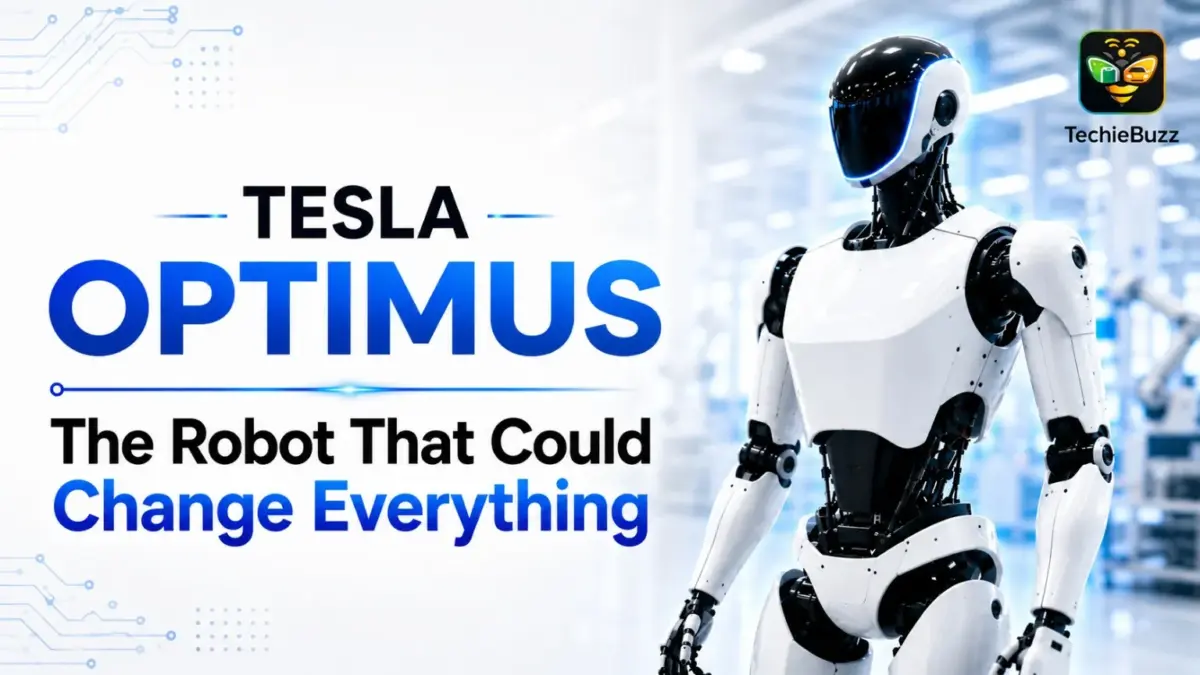
Tesla Optimus Explained: Discover how Tesla’s humanoid robot works, its AI capabilities, latest developments, real-world applications, challenges, and why it could change the future of work.
Just a few years ago, the idea of a humanoid robot working alongside people sounded like something straight out of a science-fiction movie. Today, that future feels much closer than many expected.
At the center of this shift is Tesla Optimus, Tesla’s ambitious humanoid robot project. While Tesla built its reputation by revolutionizing electric vehicles, the company now believes robotics could become one of its most important businesses over the coming decades.
That may sound like an ambitious claim, but the progress of Optimus has been difficult to ignore. Since its first public reveal in 2021, Tesla has steadily transformed the project from a concept into a working prototype capable of walking, balancing, manipulating objects, and performing selected tasks inside Tesla facilities. Although the robot is still under active development, every new demonstration highlights meaningful improvements in mobility, dexterity, and artificial intelligence.
The excitement surrounding Optimus isn’t simply about building another robot. Tesla is attempting to create a general-purpose machine that can operate in environments designed for humans. If successful, it could help address labor shortages, improve workplace safety, increase productivity, and eventually assist with everyday household tasks.
At the same time, important questions remain. Can Tesla manufacture humanoid robots at scale? Will they become affordable? How will they affect employment? And is Optimus truly ahead of its competitors?
In this article, we’ll explore how Tesla Optimus works, its latest developments, real-world applications, challenges, expert opinions, and why it could become one of the defining technologies of the next decade.
What Is Tesla Optimus?
Tesla Optimus—also known as the Tesla Bot—is a general-purpose humanoid robot designed to perform repetitive, physically demanding, or potentially hazardous work.
Unlike traditional industrial robots that are bolted to factory floors and programmed for a single repetitive task, Optimus is designed to move freely through workplaces built for people. It can walk, carry objects, recognize obstacles, manipulate tools, and interact with equipment using two arms and human-like hands.
Tesla introduced the project during AI Day 2021, where it attracted both excitement and skepticism. Many questioned whether an automotive company could realistically build one of the world’s most advanced humanoid robots.
Since then, Tesla has steadily demonstrated improvements across multiple generations of Optimus. The robot has evolved from carefully controlled walking demonstrations to performing selected internal tasks such as moving components and handling simple repetitive operations within Tesla facilities. These demonstrations are still part of Tesla’s development program rather than large-scale commercial deployment, but they indicate meaningful technical progress.
More importantly, Optimus benefits from technologies Tesla has already spent years developing for its electric vehicles, including computer vision, artificial intelligence, custom hardware, battery systems, and advanced manufacturing.
Why Tesla Is Building a Humanoid Robot
According to Tesla CEO Elon Musk, one of the world’s biggest long-term challenges will be labor shortages.
Many developed countries are experiencing aging populations and declining birth rates. At the same time, industries such as manufacturing, logistics, healthcare, agriculture, and warehousing continue to struggle to recruit workers for repetitive or physically demanding jobs.
Tesla believes humanoid robots could help bridge that gap.
Instead of designing separate robots for thousands of different tasks, Tesla wants to create one adaptable platform capable of learning many different jobs.
The humanoid form is a practical choice rather than simply a futuristic design.
Factories, hospitals, offices, warehouses, and homes have all been built around people. A robot that can use stairs, open doors, lift boxes, operate existing tools, and move through human spaces can work in many environments without requiring costly redesigns.
This flexibility could make humanoid robots far more valuable than highly specialized machines.

Image Credit: insideevs
How Tesla Optimus Works
One reason industry experts take Optimus seriously is that Tesla isn’t developing every technology from scratch. Instead, the company combines several technologies already proven across its automotive business.
Advanced Computer Vision
Rather than relying primarily on expensive laser-based sensors, Optimus uses multiple cameras positioned around its body.
These cameras continuously observe the surrounding environment while Tesla’s AI software analyzes images in real time.
The robot can identify objects, estimate distances, recognize people, and navigate around obstacles using the same vision-first philosophy Tesla has developed for its autonomous driving technology.
This approach could eventually reduce manufacturing costs while allowing continuous improvements through software updates.
Artificial Intelligence
Vision alone cannot create an intelligent robot.
Optimus relies on deep neural networks trained using enormous amounts of visual and operational data.
Instead of following fixed instructions for every situation, the robot continuously interprets its surroundings and decides how to respond.
Its AI enables it to:
- Recognize tools and everyday objects
- Adapt to changing environments
- Learn repetitive tasks
- Improve movement efficiency
- Avoid obstacles
- Coordinate both hands during complex actions
As Tesla gathers additional real-world data, Optimus should continue improving through software rather than relying solely on hardware upgrades.
Human-Like Motion
Walking naturally is one of robotics’ most difficult engineering challenges.
Every step requires constant balance adjustments, joint coordination, and real-time decision-making.
Tesla developed custom electric actuators that function similarly to human muscles and joints.
These actuators allow Optimus to:
- Walk naturally
- Maintain balance while carrying objects
- Climb stairs
- Pick up delicate items
- Carry heavier loads
- Perform repetitive physical work
- Coordinate both hands simultaneously
Each generation has demonstrated smoother movement and improved stability, suggesting Tesla is steadily refining both its mechanical engineering and AI control systems.
Latest Tesla Optimus Developments
Over the past few years, Tesla has shared demonstrations showing Optimus becoming noticeably more capable.
Recent improvements include the following:
- More fluid walking and balance
- Faster movement than earlier prototypes
- Improved hand dexterity
- Better object manipulation
- Autonomous sorting of components
- Increased stability while carrying loads
Tesla has also shown Optimus performing selected internal manufacturing tasks as part of ongoing testing and data collection. However, the company has acknowledged that the robot remains in an active development phase and is not yet operating as a large-scale commercial workforce.
Tesla’s next objective is to gradually increase production while continuing to improve reliability, software intelligence, and manufacturing efficiency. Industry observers generally expect industrial deployments to precede any consumer version.
Tesla’s Biggest Advantage May Not Be the Robot
Many robotics companies have demonstrated impressive humanoid robots.
Far fewer have demonstrated the ability to manufacture complex products at a global scale.
This is where Tesla could have a meaningful advantage.
The company already designs and manufactures many of the technologies Optimus depends on, including:
- Battery systems
- Electric motors
- AI chips
- Computer vision software
- Manufacturing equipment
- Large-scale neural-network training infrastructure
Tesla is also investing heavily in AI computing infrastructure, including its Dojo supercomputer project, which is intended to accelerate machine-learning development.
This vertical integration allows Tesla to improve hardware and software together while reducing dependence on outside suppliers.
If Optimus eventually reaches mass production, Tesla’s manufacturing experience may prove just as important as its robotics research.
Tesla Optimus vs Other Humanoid Robots
Tesla is no longer the only company betting on humanoid robotics. Several technology firms and robotics startups are racing to build machines capable of working alongside people.
Here’s how Optimus compares with some of its biggest competitors.
| Feature | Tesla Optimus | Figure 02 | Unitree G1 |
|---|---|---|---|
| Primary Purpose | General-purpose work | Industrial automation | Research, education & mobility |
| AI Platform | Tesla Neural Networks | AI-powered reasoning models | AI-assisted motion control |
| Target Market | Factories, logistics, homes | Manufacturing & warehouses | Developers & research |
| Mobility | Human-like walking | Human-like walking | Agile walking and running |
| Long-Term Goal | Large-scale production | Enterprise deployment | Affordable humanoid platform |
Each company is approaching robotics differently.
Figure AI has focused heavily on industrial partnerships, while Unitree has gained attention by making humanoid robots more affordable for developers and research institutions.
Tesla’s strategy, however, is unique because it combines robotics with decades of experience in electric vehicles, artificial intelligence, battery technology, and high-volume manufacturing.
If Tesla succeeds in reducing production costs, Optimus could become one of the first humanoid robots produced at automotive scale.
Market Trends: Why Humanoid Robots Matter
Humanoid robotics is no longer a niche research field.
Growing labor shortages, rising wages, aging populations, and rapid advances in artificial intelligence are encouraging companies to invest billions of dollars in robotics.
Manufacturing, logistics, healthcare, retail, agriculture, hospitality, and construction all face increasing pressure to improve productivity while addressing workforce shortages.
Industry analysts expect the humanoid robotics market to expand significantly over the next decade as hardware becomes more reliable and AI systems become increasingly capable.
Several factors are accelerating this transition:
- Better AI models
- More efficient batteries
- Lower computing costs
- Improved electric motors
- Faster machine-learning development
- Increased investment from technology companies
While commercial adoption will likely happen gradually, the long-term direction appears clear: intelligent robots are becoming an increasingly important part of industrial automation.
Real-World Applications
One of Tesla Optimus’ greatest strengths is flexibility.
Instead of performing a single repetitive task, Tesla wants Optimus to learn thousands of different activities.
Manufacturing
Factories remain the robot’s most practical starting point.
Optimus could:
- Move materials between production stations
- Perform repetitive assembly work
- Conduct visual inspections
- Handle hazardous materials
- Support workers during peak production
Because Tesla owns multiple manufacturing facilities, it can continuously improve Optimus using real operational environments.
Warehousing and Logistics
Warehouses require workers to lift, transport, organize, and sort products throughout the day.
Humanoid robots could reduce physical strain while maintaining consistent productivity.
Unlike fixed automation systems, Optimus could move freely through existing warehouse layouts.
Healthcare
Healthcare professionals spend significant time performing repetitive physical tasks.
Future versions of Optimus could help by:
- Delivering medical supplies
- Moving equipment
- Assisting patient mobility
- Supporting hospital logistics
Robots are unlikely to replace doctors or nurses, but they may reduce physical workloads and improve operational efficiency.
Household Assistance
Perhaps the most exciting long-term vision is the home.
Imagine a robot capable of:
- Folding laundry
- Carrying groceries
- Cleaning floors
- Organizing rooms
- Watering plants
- Assisting elderly family members
Although these capabilities remain years away, they represent Tesla’s broader ambition of creating a useful everyday assistant rather than simply another industrial robot.
Challenges Tesla Still Faces
Despite impressive demonstrations, significant obstacles remain before Optimus becomes commonplace.
Reliability
Robots must operate safely and consistently for thousands of hours.
A successful demonstration lasting a few minutes is very different from continuous real-world operation.
Battery Life
Balancing mobility, computing power, and operating time remains one of robotics’ biggest engineering challenges.
Future improvements in battery technology will play an important role.
Safety
Working alongside people requires extremely reliable perception and decision-making.
Robots must identify people, predict movement, and react instantly to unexpected situations.
Safety will remain a top priority before large-scale deployment.
Cost
Humanoid robots are still expensive to build.
Tesla hopes manufacturing at scale will reduce costs, but commercial pricing remains unknown.
Regulation
Governments around the world are still developing regulations covering autonomous robots.
Safety standards, legal responsibility, workplace rules, and certification requirements will all influence future adoption.
Ethical Questions We Must Consider
Like every major technological breakthrough, humanoid robots raise important ethical questions.
One concern is employment.
History suggests automation changes jobs rather than simply eliminating them, but workers performing repetitive physical tasks may require opportunities to learn new skills related to robotics, maintenance, and artificial intelligence.
Privacy is another important issue.
Because humanoid robots rely on cameras and AI systems, companies will need strong safeguards to protect personal information and prevent misuse.
There is also the question of accountability.
If an autonomous robot causes damage or injury, determining legal responsibility may become increasingly complex.
Addressing these concerns responsibly will be essential for public acceptance.
Expert Analysis: My Perspective
After following Tesla’s robotics progress over the past several years, one conclusion stands out.
Tesla’s greatest strength may not be building the world’s smartest humanoid robot first.
Its real advantage lies in integration.
Very few companies control batteries, electric motors, AI chips, software, manufacturing systems, and large-scale machine-learning infrastructure under one roof.
That integration allows Tesla to improve hardware and software together while potentially reducing long-term manufacturing costs.
However, expectations should remain realistic.
Today’s Optimus demonstrations occur in controlled environments.
Homes, hospitals, construction sites, and public spaces are far less predictable.
Robotics experts generally agree that reliable manipulation of unfamiliar objects and safe autonomous operation in dynamic environments remain some of the industry’s toughest engineering challenges.
In my view, the biggest question is no longer whether humanoid robots will become commercially useful.
The real question is how quickly companies like Tesla can make them affordable, dependable, and safe enough for widespread adoption.
If Tesla succeeds, Optimus could become as transformative for physical work as smartphones were for digital communication.
Final Verdict
Tesla Optimus is no longer just an ambitious concept—it has become one of the world’s most closely watched robotics projects.
While the technology still faces engineering, economic, and regulatory challenges, the progress made since its introduction has been remarkable.
Whether Tesla ultimately becomes the leader in humanoid robotics remains uncertain. Strong competition from companies like Figure AI, Unitree Robotics, Boston Dynamics, and others will continue driving innovation.
What seems increasingly clear is that intelligent humanoid robots are moving from science fiction toward commercial reality.
Just as smartphones reshaped communication and electric vehicles transformed transportation, humanoid robots may fundamentally change how people work over the coming decades.
Tesla Optimus may not be the final destination, but it has already become one of the industry’s most influential milestones—and its journey is only beginning.
Frequently Asked Questions (FAQs)
Is Tesla Optimus available to buy?
No. Tesla is currently using Optimus for internal development and testing while continuing to improve both its hardware and software.
What can Tesla Optimus do today?
Current demonstrations show Optimus walking independently, maintaining balance, manipulating objects, sorting components, and performing selected internal manufacturing tasks.
How much will Tesla Optimus cost?
Tesla has not announced an official retail price. The eventual cost will depend on manufacturing scale, component prices, and commercial strategy.
Can Tesla Optimus climb stairs?
Tesla has demonstrated steady improvements in mobility and balance. Future versions are expected to navigate increasingly complex environments, including stairs.
Will Tesla Optimus replace human workers?
It is expected to automate certain repetitive and physically demanding tasks while also creating new opportunities in robotics, AI, maintenance, and systems engineering.
How is Tesla Optimus different from other humanoid robots?
Tesla combines AI expertise, computer vision, battery technology, custom hardware, and large-scale manufacturing experience within a single ecosystem. That integrated approach could become a major competitive advantage if the company successfully scales production.
When will Tesla Optimus become widely available?
Tesla has not announced a confirmed consumer launch date. Most industry observers expect industrial deployments to expand before any widespread consumer availability.
Author’s Note
This article has been researched using Tesla’s public AI presentations, company announcements, public demonstrations, and broader developments across the robotics industry. Because humanoid robotics is evolving rapidly, product capabilities, production timelines, and commercial deployment plans may change as Tesla and its competitors continue development.
Suggested Internal Links for TechieBuzz
Tesla Cybercab Explained: The Future of Autonomous Transportation
What Is Elon Musk’s Starlink? How Space-Based Internet Is Challenging Traditional Broadband
What Happened to Nokia? The Rise and Fall of a Mobile Phone Giant