
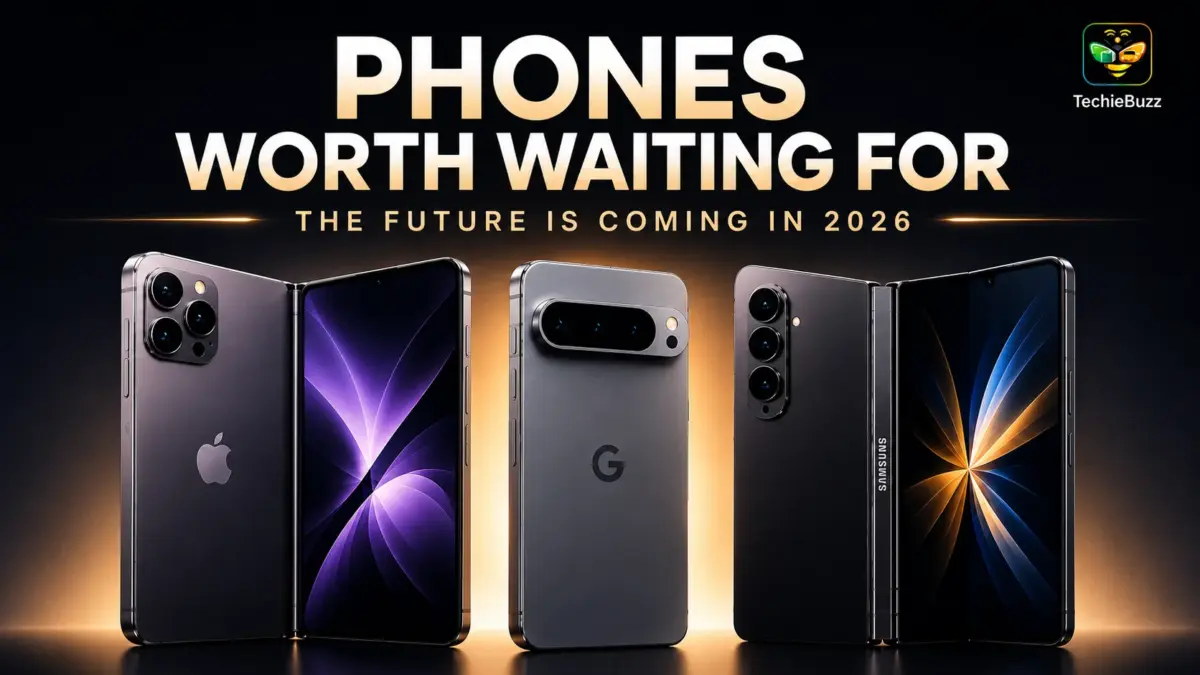
Thinking about upgrading? Discover the 5 smartphones worth waiting for in 2026, including iPhone 18 Pro, Pixel 11 Pro, Apple Fold, and more.
For most of the past decade, smartphone launches have followed a familiar script.
Manufacturers promised better cameras, faster processors, and brighter displays. The improvements were real, but increasingly difficult to notice in everyday use. As a result, consumers began holding onto their devices longer. The annual upgrade cycle that once fueled the smartphone industry started slowing down.
That’s exactly why 2026 matters.
The next wave of smartphones isn’t trying to convince people with bigger numbers on a spec sheet. Instead, Apple, Google, Samsung, and OnePlus are all pursuing a different goal: making smartphones more useful.
Artificial intelligence is at the center of that effort.
Whether it’s Apple Intelligence, Google Gemini, or Samsung’s Galaxy AI platform, the battle is no longer about which phone has the best camera. It’s about which ecosystem can save users the most time, reduce everyday friction, and create experiences that feel genuinely smarter.
That’s a much bigger shift than most consumers realize.
And it’s why some of the most anticipated smartphones of 2026 may be worth waiting for.
Why Smartphone Upgrades Are Slowing Down
Before looking ahead, it’s important to understand what has changed.
Five years ago, upgrading your phone often meant dramatic improvements in camera quality, battery life, display technology, and performance.
Today, even a three-year-old flagship phone remains remarkably capable.
Many consumers are keeping devices for four or five years because modern smartphones simply don’t become obsolete as quickly as they once did.
That creates a challenge for manufacturers.
How do you convince someone to replace a phone that’s already good enough?
The answer appears to be artificial intelligence.
The companies that can create AI features people actually use every day will have the strongest argument for upgrading.
That’s the lens through which we evaluated every phone on this list.

At a Glance
🏆 Best Upcoming Smartphone Overall: iPhone 18 Pro
🤖 Best AI Smartphone: Google Pixel 11 Pro
📱 Best Foldable: Samsung Galaxy Z Fold 8
💰 Best Value Flagship: OnePlus 15
👀 Most Anticipated Device: Apple’s Foldable iPhone
1. iPhone 18 Pro
Expected Launch
September 2026
Expected Price
$999-$1,099
Why It’s Important
The iPhone 18 Pro may become the most consequential iPhone launch since the iPhone X.
Not because of its hardware.
Because of its software.
Recent developments surrounding iOS 27 suggest Apple is preparing a more ambitious version of Apple Intelligence, one that moves beyond simple writing tools and image generation toward context-aware assistance across the entire ecosystem.
For years, Apple has excelled at hardware integration. The next challenge is software intelligence.
The Real Opportunity
Apple controls one of the largest technology ecosystems in the world.
More than two billion active devices already exist within that ecosystem.
If Apple successfully delivers AI experiences that genuinely improve productivity, communication, and everyday workflows, adoption could happen at a scale few competitors can match.
The Risk
Google currently has a meaningful head start in consumer AI.
Apple’s challenge isn’t introducing AI.
It’s proving that Apple Intelligence can become as useful as Gemini while maintaining Apple’s emphasis on privacy and simplicity.
Who Should Wait?
If you’re already invested in Apple’s ecosystem, the iPhone 18 Pro is arguably the safest smartphone bet of 2026.
2. Apple’s Foldable iPhone
Expected Launch
Late 2026 to Early 2027
Expected Price
$1,999-$2,499
Why Everyone Is Paying Attention
Apple’s rumored foldable iPhone represents one of the most fascinating product launches in years.
Unlike many competitors, Apple has deliberately avoided entering the foldable market early.
That decision now looks strategic.
Foldables have matured significantly. Durability has improved. Software has improved. Consumer awareness has improved.
Apple appears to be entering the category at a time when many of the early problems have already been solved.
The Real Challenge
However, Apple faces a problem that rarely existed in previous categories.
Samsung already owns the foldable conversation.
By the time Apple launches its first foldable device, Samsung will likely be refining its eighth-generation Fold lineup.
For perhaps the first time, Apple won’t be competing against immature products.
It will be competing against a mature category leader.
Why It Could Still Matter
If Apple can combine its software ecosystem with a polished foldable design, it could bring foldables into the mainstream in a way no competitor has yet achieved.
Who Should Wait?
Early adopters and users looking for the next major evolution in smartphone design.
3. Google Pixel 11 Pro
Expected Launch
August 2026
Expected Price
$999-$1,199
Why It May Be the Most Influential Phone Here
If Apple represents potential, Google represents execution.
While competitors continue building AI ecosystems, Google already operates one.
Gemini isn’t limited to Pixel phones.
It’s integrated across Search, Android, Workspace, Chrome, and Google’s broader software ecosystem.
That creates a strategic advantage no other smartphone manufacturer currently possesses.
Google’s Biggest Strength
Data.
Google understands search intent, language, context, and user behavior at a scale few companies can approach.
Those strengths directly benefit Gemini.
Google’s Biggest Weakness
Hardware remains Google’s challenge.
Pixel devices continue earning praise from reviewers, but they still lack the retail reach, ecosystem lock-in, and mainstream brand loyalty enjoyed by Apple and Samsung.
Technology leadership doesn’t always translate into market leadership.
Who Should Wait?
Anyone who believes AI will become the defining smartphone feature of the next decade.
4. Samsung Galaxy Z Fold 8
Expected Launch
Summer 2026
Expected Price
$1,899-$2,099
Why Samsung Still Owns Foldables
Many companies build foldable phones.
Samsung built the foldable market.
Years of iteration have allowed Samsung to refine durability, multitasking, software optimization, and productivity features in ways competitors continue trying to match.
That experience matters.
The Productivity Advantage
The most interesting thing about foldables is that they’re no longer marketed as futuristic gadgets.
They’re increasingly marketed as work tools.
For professionals who spend hours managing email, reviewing documents, attending meetings, and multitasking, foldables can reduce the need to carry multiple devices.
The Competitive Threat
Ironically, Samsung’s biggest challenge may not be hardware.
It may be Apple’s eventual arrival.
If Apple successfully enters the foldable category, Samsung will need to defend a market it largely created.
Who Should Wait?
Professionals, travelers, and power users who value productivity above all else.
5. OnePlus 15
Expected Launch
Late 2026
Expected Price
$799-$999
Why This Phone Matters More Than Most People Think
The smartphone industry has a pricing problem.
Flagship devices increasingly cost as much as premium laptops.
Consumers notice that.
OnePlus remains one of the few manufacturers consistently focused on delivering flagship-level performance without flagship-level pricing.
The Value Equation
Many consumers assume a $1,400 phone must be dramatically better than a $900 phone.
In reality, the difference is often much smaller than the price gap suggests.
That’s where OnePlus continues to find success.
The Opportunity
As smartphone prices continue rising, value may become one of the industry’s most important differentiators.
OnePlus is well-positioned to benefit from that trend.
Who Should Wait?
Buyers who want premium performance without crossing into ultra-premium pricing territory.
The Battle That Matters Most: Gemini vs Apple Intelligence
Most smartphone comparisons focus on processors, cameras, and displays.
Those comparisons increasingly miss the bigger story.
The real battle of 2026 is software intelligence.
Google believes AI should become the primary interface between users and technology.
Apple appears to believe AI should remain largely invisible, quietly enhancing experiences behind the scenes.
Neither approach is necessarily right.
But they represent fundamentally different visions for the future of personal computing.
The company that gets this right could shape smartphone usage patterns for years to come.
Should You Upgrade Now or Wait?
Wait If You Own
- iPhone 15 or newer
- Galaxy S25 or newer
- Pixel 9 or newer
Upgrade Now If You Own
- iPhone 13 or older
- Galaxy S22 or older
- Pixel 7 or older
Don’t Wait If
- Your battery health is declining significantly
- Your device no longer receives security updates
- Your phone affects work productivity
- You’re experiencing frequent performance issues
Technology never stops improving.
At some point, waiting becomes more expensive than upgrading.
Final Verdict
Most smartphone years are incremental.
2026 doesn’t look incremental.
Apple is trying to reinvent the iPhone around intelligence. Google is pushing AI deeper into everyday computing. Samsung continues refining the foldable category it helped create. And OnePlus is proving flagship experiences don’t need flagship prices.
The winners and losers won’t be determined by megapixels or benchmark scores.
They’ll be determined by who can make technology feel less like technology and more like assistance.
That’s why these aren’t just the most exciting smartphones of 2026.
They’re the devices most likely to influence where the entire industry goes next.
Editorial Transparency
This analysis is based on publicly available manufacturer information, software discoveries, supply-chain reporting, analyst forecasts, and industry developments available as of June 2026. Final specifications, pricing, and release schedules remain subject to change until officially announced.
Read related articles :