
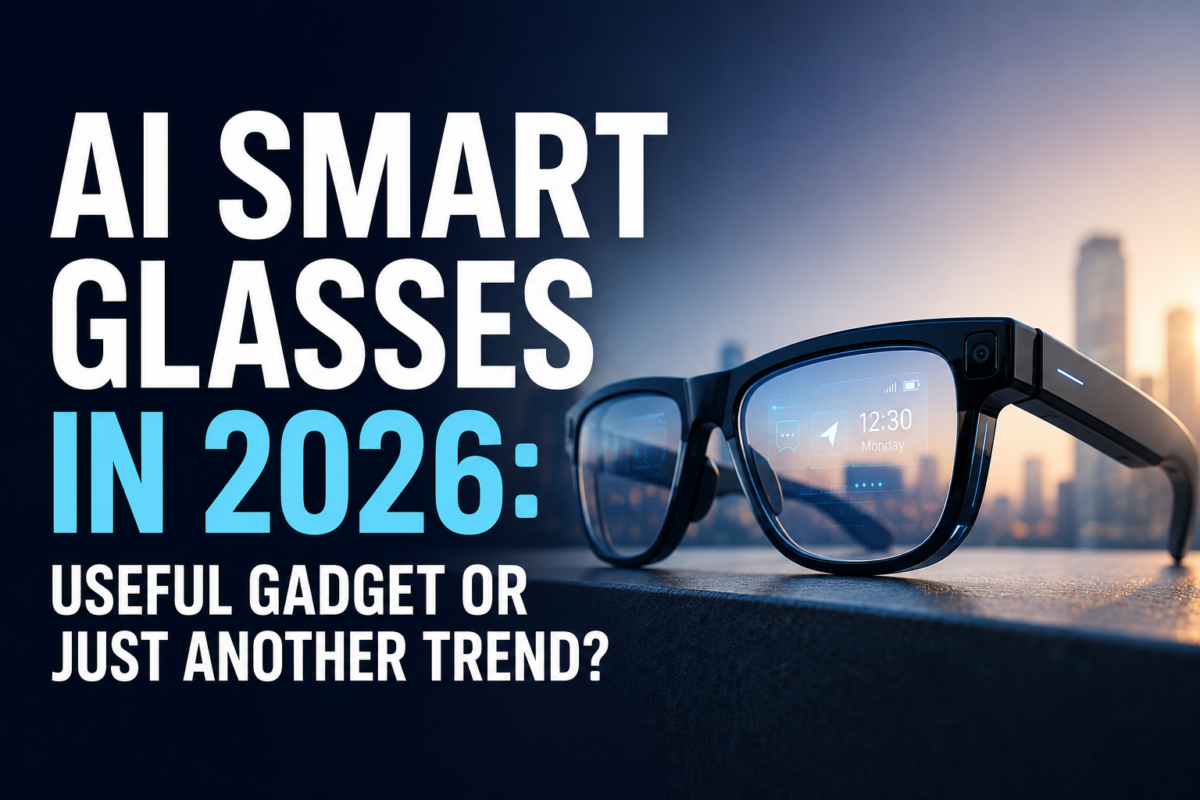
Discover whether AI smart glasses in 2026 are finally worth buying. Learn about real-world usability, battery life, smart features, privacy concerns, and who should actually consider them.AI smart glasses are becoming one of the most talked-about gadget categories in 2026. A few years ago, they felt more like futuristic experiments than practical products. Most people were curious about them, but very few actually wanted to wear them daily.
That situation is slowly changing.
Modern AI smart glasses are becoming smarter, lighter, and far more useful in real-world situations. Instead of trying to replace smartphones completely, companies are now focusing on making everyday tasks easier through hands-free interaction.
And honestly, that approach makes much more sense.
Why AI Smart Glasses Are Trending in 2026
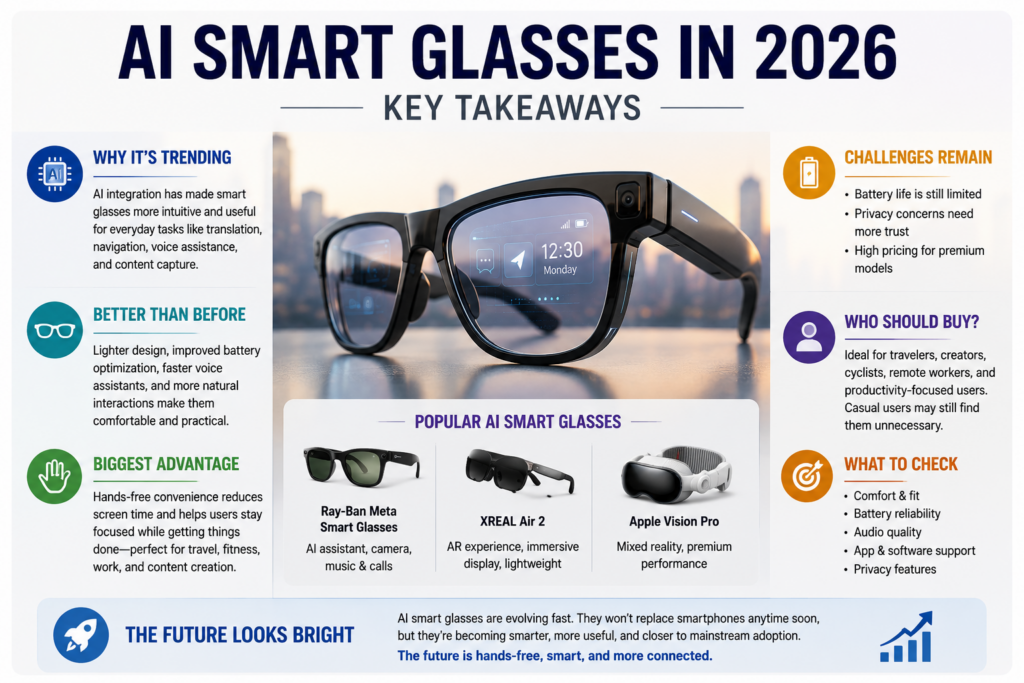
The biggest reason AI smart glasses are gaining attention again is artificial intelligence.
Earlier smart glasses mostly focused on notifications, cameras, or basic augmented reality features. In 2026, AI smart glasses are becoming more context-aware and practical for everyday use.
Modern AI smart glasses can now:
- Translate conversations in real time
- Read text aloud instantly
- Provide voice assistance naturally
- Help with navigation
- Capture photos hands-free
- Connect smoothly with smartphones
That shift changes the experience completely because the technology now feels more useful instead of experimental.
What Makes AI Smart Glasses Better Than Older Models
One major improvement is the design.
Older smart glasses often looked bulky and uncomfortable, which made people hesitant to wear them regularly. Newer AI smart glasses are becoming much lighter and closer to normal eyewear.
That matters more than many tech companies initially realized.
Most people simply will not wear a gadget every day if it feels awkward or attracts too much attention.
Battery optimization has also improved compared to older generations, although heavy AI usage can still drain power quickly during long sessions.
Voice assistants are also becoming faster and more conversational. Users no longer need robotic commands just to perform simple tasks, which makes the overall experience feel far more natural.
The Biggest Advantage of AI Smart Glasses
The real strength of AI smart glasses is convenience.
People already spend too much time looking at smartphone screens every day. AI smart glasses reduce some of that screen dependency by making information available instantly without interrupting daily activities.
For example:
- Travelers can follow directions naturally while walking
- Cyclists can receive navigation safely
- Creators can record moments instantly
- Professionals can multitask more efficiently
It sounds simple, but hands-free interaction changes how technology fits into daily life.
That is one reason major tech companies continue investing heavily in AI wearable devices.
Popular AI Smart Glasses in 2026
Some products are helping push this category closer to mainstream adoption.
Popular examples include:
- Ray-Ban Meta Smart Glasses
- XREAL Air 2
- Apple Vision Pro
Each product focuses on different experiences, from AI assistance and content creation to immersive augmented reality features.
Where AI Smart Glasses Still Struggle
Even though the technology has improved significantly, AI smart glasses still have limitations.
Battery Life
Battery life remains one of the biggest weaknesses. AI-powered features and cameras consume a lot of power, especially during heavy usage.
Privacy Concerns
Wearable cameras naturally make some people uncomfortable in public spaces. Companies are now adding visible recording indicators and stronger privacy controls, but public trust still needs time to grow.
High Pricing
Premium AI smart glasses are still expensive. For many buyers, they still feel more like secondary gadgets rather than essential devices.
Are AI Smart Glasses Actually Worth Buying?
For some users, definitely.
AI smart glasses make the most sense for:
- Travelers
- Content creators
- Cyclists and runners
- Remote workers
- Productivity-focused users
- Early tech adopters
For casual users who mainly browse social media or watch videos, smart glasses may still feel unnecessary right now.
And honestly, that is completely understandable.
What Buyers Should Check Before Buying AI Smart Glasses
A lot of marketing focuses heavily on AI features, but real-world usability matters far more.
Comfort Matters Most
If AI smart glasses feel heavy or uncomfortable, users stop wearing them quickly.
Battery Reliability
Consistent battery life matters more than impressive promotional claims.
Audio Quality
Open-ear speakers should sound clear without disturbing nearby people.
App Support
The software experience matters just as much as the hardware itself.
Privacy Features
Visible recording indicators and privacy controls improve trust and make users feel more comfortable using smart glasses publicly.
Watch Top 20 Smart AI glasses in 2026
The Future of AI Smart Glasses
AI smart glasses are clearly becoming part of a larger wearable technology trend.
Companies are now focusing heavily on:
- Real-time AI assistants
- Voice-first interaction
- Live translation
- Lightweight wearable computing
- Smarter contextual assistance
Instead of replacing smartphones completely, AI smart glasses are more likely to work alongside them.
That feels like a far more realistic direction for the category.
Final Thoughts on AI Smart Glasses in 2026
AI smart glasses in 2026 are finally starting to feel useful in everyday situations.
They are still not essential gadgets for everyone, but they are no longer just futuristic concepts either.
For travelers, creators, and productivity-focused users, the convenience of hands-free interaction is becoming genuinely valuable.
There is still room for improvement, especially in battery life and affordability. But compared to earlier generations, AI smart glasses now feel much closer to mainstream adoption.
And honestly, that makes this category far more interesting than it was just a few years ago.
FAQs About AI Smart Glasses
Are AI smart glasses worth buying in 2026?
For travelers, creators, and productivity-focused users, AI smart glasses are becoming genuinely useful.
Can AI smart glasses replace smartphones?
Not completely. Most smart glasses currently work alongside smartphones rather than replacing them.
What is the biggest problem with AI smart glasses?
Battery life and pricing are still the biggest challenges.
Experience & Editorial Note
This article is based on current wearable technology trends, evolving AI gadget usage patterns, practical usability observations, and real-world consumer behavior surrounding AI smart glasses and wearable devices in 2026.
Read More : Best DJI Drones in 2026: Which One Should You Actually Buy?