
By the TechieBuzz Auto Desk — covering automotive technology, ownership trends, fuel efficiency insights, and practical car-buying advice for Indian drivers.
Thinking about buying a hybrid SUV in India? Learn how hybrid SUVs work, their real-world mileage, ownership costs, and whether they are worth buying in 2026.
Why Hybrid SUVs Are Suddenly Everywhere
If you’ve searched for a new SUV recently, you’ve probably noticed one thing: almost every major car brand is talking about hybrid technology.
A few years ago, hybrids felt niche and expensive. Now they’re becoming a practical option for families, city commuters, and highway drivers who want better mileage without fully switching to an electric vehicle.
The reason is simple. Fuel prices remain unpredictable, traffic keeps getting worse in major cities, and many buyers still worry about charging infrastructure for EVs.
Hybrid SUVs sit in the middle.
They combine a petrol engine with an electric motor to improve fuel economy and reduce fuel consumption during stop-and-go traffic. For many Indian buyers, that balance feels safer and more practical than going fully electric.
But there’s also confusion.
Some cars are marketed as “strong hybrids.” Others are called “mild hybrids.” Many buyers assume both systems work the same way. They don’t.
This guide breaks down how hybrid SUVs actually work, who should buy one, where they make sense, and when a regular petrol or diesel SUV may still be the smarter decision.
What Is a Hybrid SUV?
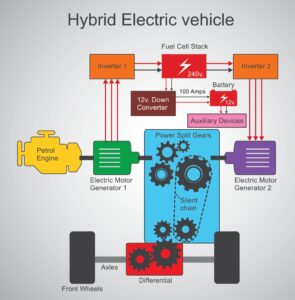
A hybrid SUV uses two power sources:
- A traditional internal combustion engine
- An electric motor powered by a battery
The car automatically switches between the two systems depending on speed, throttle input, and traffic conditions.
In slow-moving city traffic, the electric motor may handle part of the driving load. During acceleration or highway overtakes, the petrol engine assists.
The goal is better fuel efficiency without requiring external charging.
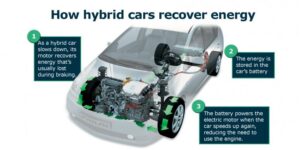
Unlike fully electric cars, most hybrids recharge their batteries through:
- Regenerative braking
- Engine-generated power
- Coasting energy recovery
That means you don’t need a charging station at home.
Mild Hybrid vs Strong Hybrid: The Difference Matters
This is where many buyers get misled.
Mild Hybrid
A mild hybrid system provides limited assistance to the engine.
It cannot drive the car independently for long distances using electric power alone.
Benefits usually include: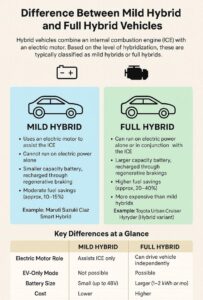
- Slightly better mileage
- Smoother start-stop operation
- Reduced engine strain
- Better low-speed refinement
But the fuel savings are usually modest.
Strong Hybrid
A strong hybrid can drive short distances using only electric power.
This setup delivers:
- Significantly higher fuel efficiency
- Better city driving economy
- Lower fuel costs over time
- Quieter low-speed operation
For heavy urban usage, strong hybrids generally offer the biggest advantage.
Who Should Actually Buy a Hybrid SUV?
Hybrid SUVs are not automatically the best choice for everyone.
They make the most sense for specific driving patterns.
Best for City Drivers
If you spend most of your time in:
- Urban traffic
- Daily office commutes
- Slow-moving roads
- Frequent stop-and-go conditions
A strong hybrid SUV can reduce fuel consumption noticeably.
In city traffic, hybrids often operate on electric assistance more frequently, which improves real-world efficiency.
Good for High Monthly Running 
Drivers covering:
- 1,500 km or more per month
- Daily intercity travel
- Frequent airport runs
- Cab or business-related movement
may recover the higher upfront cost faster through fuel savings.
Good for Buyers Not Ready for EVs
Many Indian buyers still hesitate to switch fully electric because of:
- Charging limitations
- Apartment parking issues
- Long-distance travel concerns
- concerns about long-distance charging reliability
Hybrids remove most of those worries.
When a Hybrid SUV May Not Be Worth It
There are situations where hybrids simply don’t provide enough value.
Low-Usage Owners
If you drive only occasionally or cover less than 700–800 km monthly, the higher purchase cost may not justify the fuel savings.
Mostly Highway Drivers
Hybrid systems shine in traffic-heavy conditions.
At constant highway speeds, petrol engines already operate efficiently, so the hybrid advantage becomes smaller.
Buyers Planning Short Ownership
If you change cars every 3–4 years, recovering the premium paid for a hybrid can become difficult.
Real-World Ownership Experience: What Most Reviews Ignore
Many online reviews focus heavily on specifications.
But ownership experience matters more after six months.
Here’s what long-term hybrid owners commonly report.
The Quiet Cabin Effect
One of the first things owners notice is refinement.
In traffic, hybrid SUVs often feel quieter because the engine shuts off during idle conditions.
That reduces fatigue during long commutes.
Smoothness in Traffic
Electric assistance improves low-speed responsiveness.
The car feels less jerky in bumper-to-bumper traffic.
Better Fuel Economy in Cities Than Highways
This surprises many buyers.
Hybrid SUVs often deliver their best mileage inside cities rather than on highways.
That’s the opposite of many conventional petrol SUVs.
Maintenance Is Usually Not Dramatically Higher
Modern hybrid systems have become more reliable than many buyers assume.
Routine servicing is generally similar to petrol vehicles.
However, battery replacement costs remain a concern for long-term ownership beyond warranty periods.
Common Questions Buyers Usually Ask About Hybrid SUVs
“Hybrid Batteries Fail Quickly”
Most modern hybrid batteries are designed for long-term usage and typically come with extended warranties.
Battery technology has improved significantly over the past decade.
“Are Hybrid SUVs Slow?”
Not necessarily.
Electric motors provide instant torque, which can actually improve low-speed acceleration.
Many hybrid SUVs feel quicker in city driving than naturally aspirated petrol SUVs.
“Are Hybrid SUVs Expensive to Maintain?”
Regular maintenance is often comparable to standard petrol cars.
The real concern is long-term battery replacement after many years of ownership.
Important Questions to Ask Before Buying a Hybrid SUV
Before booking any hybrid vehicle, ask these questions.
1. What Is My Actual Monthly Running?
Calculate your realistic monthly driving distance.
Do not estimate emotionally.
Fuel savings matter only when usage is high enough.
2. Is It a Mild or Strong Hybrid?
Marketing terms can confuse buyers.
Ask clearly.
The difference directly impacts mileage and driving experience.
3. How Long Do I Plan to Keep the Vehicle?
Hybrid ownership becomes more financially attractive over longer ownership periods.
4. What Is the Battery Warranty?
Always verify:
- Battery coverage period
- Kilometre limit
- Replacement terms
- Service network availability
5. Does My Driving Pattern Match Hybrid Benefits?
If most driving happens in urban traffic, hybrids usually perform best.
The Future of Hybrid SUVs in India
India’s automotive market is entering a transition phase.
Petrol vehicles still dominate. EVs continue growing. But hybrids are increasingly becoming the middle ground.
Many manufacturers now see hybrid technology as a practical bridge between conventional combustion engines and full electrification.
For buyers, this means:
- More hybrid SUV launches
- Better fuel efficiency competition
- Wider price ranges
- Improved battery technology
The segment will likely become more competitive over the next few years.
Final Verdict
Hybrid SUVs are not a universal solution.
But for the right buyer, they can make daily driving noticeably more efficient and more comfortable.
They work best for:
- Urban commuters
- High-mileage drivers
- Families wanting fuel savings
- Buyers hesitant about full EV adoption
They may not make sense for:
- Low-usage owners
- Mostly highway drivers
- Buyers focused purely on low upfront cost
Here’s the smarter way to look at it.
Skip the marketing noise.
Focus on your actual driving habits, ownership duration, and long-term fuel expenses.
That usually reveals whether a hybrid SUV is genuinely worth the premium.
Why Readers Trust TechieBuzz
At TechieBuzz, we focus on practical automotive content designed for everyday drivers, not just specification comparisons.
Our editorial approach combines:
- Real-world ownership research
- Fuel efficiency analysis
- Automotive technology coverage
- Buyer-focused decision guides
- Long-term usability insights
We aim to simplify complex automotive topics so readers can make informed buying decisions without marketing hype.
Author Experience Statement
This article is based on analysis of real-world hybrid ownership trends, fuel-efficiency behavior in Indian traffic conditions, long-term automotive reliability discussions, and practical buyer considerations commonly overlooked in specification-focused reviews.
The goal is to provide balanced, reader-first information based on practical ownership considerations rather than promotional talking points.
I wanted to thank you for this wonderful read!! I absolutely loved every bit of it.
I’ve got you book-marked to look at new stuff
you post…
Thank you so much…that means alot